Older Workers in America
Older Workers Benefit Protection Act 1990
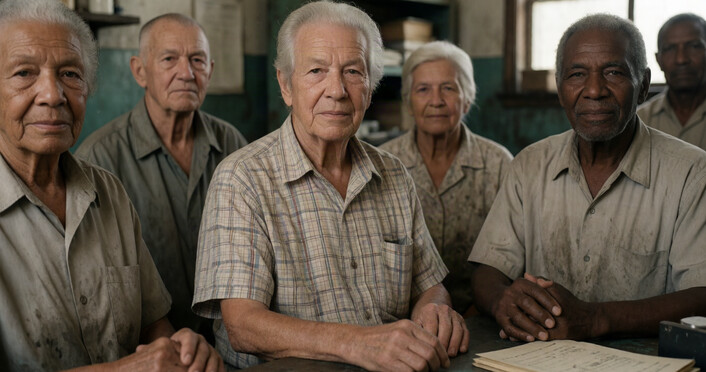
The stereotyping which is a discrimination particularly for older workers which can either be intentional or unplanned suffuses the society by acting as a serious hindrance to older workers in achieving their abilities which results in devastating social, psychological and economic issues (Brownell & Kelly, 2013). Embracing diversity in the workplace simply implies that employers complement the existing differences and thus identifies the special contributions are made by every individual thus developing a surrounding that maximizes the capability for everyone. Writers who offer employment law assignment help at Edudorm essay writing service notes that discrimination has been in existence despite the implementation of different policies for centuries now and it prevents orders persons from participating in economic growth. It has been established that based on the lack of benefits equality in the work place which is sometimes determined by age most of the older workers makes the decision of quitting work. Old age is associated with less production but this should not be used while issuing benefits skills they contribute skills and every worker deserves equal opportunities. Older workers of 65 years and beyond state that they are considered to be too old and they are forced to stop working. Most of the discrimination made in the year 2010 more than 50 percent where basically made on age discrimination with employees being considered to be too old (Guerin & Barreiro, 2016). For the employees amid the age of 50 years and 64 years normally experience difficulties when they attempt to acquire longer shifts similarly to the younger colleagues (Brownell & Kelly, 2013). Older workers without employment are holds 70% higher chances of retaining their unemployment in the future as compared to the individuals below 45 years (Guerin & Barreiro, 2016). Age discrimination began to be a social and an economic issue in the early 19th century during the industrialization era where individuals were required to work harder and for longer hours in order to increase the general productivity (Guerin & Barreiro, 2016). Everyone deserves equal treatment in the workplace regardless of their age status. The congress found it as an essential norm to pass the Act so that equality can be enhanced.
Age Discrimination in Employment Act for Older Workers in America
Offer amendment to ADEA (Age Discrimination in Employment Act), passed in1967in order to offer clarifications to the protections offered to older workers in reference to employee benefits strategies and other objectives (EEOC, 2017). Be enacted mainly by the representative’s house and the Senate of USA in the as a semblance of the congress (EEOC, 2017).
Short Title I: ‘Older Workers Benefit Protection Act’
Section 1: Findings
The congress establishes that based on the Supreme’s court decision in regard to the retirement system of public employees Versus Betts 256 (1989), there is a need for implementation of a legislative action to offer restoration to the real intentions of the congress in the amendment of ADEA 1967 which was to ban older workers benefits discrimination in exemption with adequate justification that are based on cost accountability (EEOC, 2017).
Section 2: Definition
The Act’s amendment is accomplished by adding: compensation, employment privileges, conditions and terms encompassing all the benefits of staffs (EEOC, 2017).
Section 3: Purpose
The amendment is objected in offering: observation of bona fide’s terms where the benefit packages for all the employees are equal and for the older workers they do not receive less than the cost incurred on the benefits of younger employees. In addition the early retirement voluntarily plans incentives aligns with the Acts aim (EEOC, 2017).
Section 4: Set of Laws and Rules
Without following the 9th section of ADEA’s 1967 the commission responsible for the regulation of equal chances for employment can issue some laws and regulations that the commission finds to be significant in handling the title as well as the Title’s amendment. This can only be conducted after a consultation has been done with labor and treasure secretary (EEOC, 2017).
Section 5: Effective Date
The title of the Act as well as all the involved amendment to the previous policy shall not be applicable until after a termination has been conducted on such agreements of collective bargains which is also similar to the 1st of June 1992 which happens first (EEOC, 2017).
Any employment that was conducted after the enactment of the protection of benefits for older workers shall not be credible as the application will begin to be applicable and objective two years following the enactment has occurred (EEOC, 2017).
If an employee fails to raise their need to be insured by the fresh benefits covering disability the employer can continue to offer benefits that are based on the previous Act despite the fact that the necessitates of the amended Act are not being fulfilled (EEOC, 2017).
Fresh benefits shall be determined by the period that the employees has offered services for credibility and qualification. Disability benefits will refer to all the employees programs offering long-term benefits as part of insurance of a pension plan for the employees (EEOC, 2017).
Title II: Rights or Declarations Waiver for Older Workers in America
The 7th section of ADEA 1967 is reformed through the addition several fresh subsections like; a person cannot waive any of their personal rights given by the act unless the waiving is performed with adequate knowledge and in a voluntary way which should be an agreement, specifically addressing claims or one’s rights before its execution (EEOC, 2017).
Section 2: Effective Date
Generally the reform conducted by this section shall offer respect to the waivers that happens prior to the enactment date of this Title’s Act. In addition those waivers that are proven by the commission of equal opportunities in employment and are contained in title 29 of 1627. 16 (c) which is a federal regulation code shall hold zero effect and force (EEOC, 2017).
Title III: Severability
If any of the Act’s provisions or the made adjustment or any related circumstances are regarded to be invalid the acts reminder, its amendment and provisions applications to other individuals as well as situations shall not be practical in this manner (EEOC, 2017).
The American congress and the government made the consideration that it was highly significant under the discrimination circumstances against persons based on aged thus passing the Act in 1990 (EEOC, 2017).
Social and Economic Effects of Discrimination Based on Age for Older Workers in America
OWBPA (Older Workers Benefit Protection Act 1990), regulations deny age discrimination the working organization in the situation when employers are offering fringe reimbursement that includes life insurance, health insurance, retirement, disability as well as pensions benefits (Brownell & Kelly, 2013). Experts who offer constitutional law assignment help at Edudorm essay writing service indicates that the policy therefore permits employers to decrease the offered benefits to employees characterized by older age is there is a justifiable reason based on the costs consideration. However, in most of the cases employers are necessitated to offer fair and equal opportunities to both young as well as older workers within their organizations. This requirement may be accomplished by employers by the spending of similar benefits amount offered to both of the present groups even if the conduct results in older workers getting less earning (Brownell & Kelly, 2013).
Age discrimination is defined as the stereo type of persons on the basis of their age. This kind of discrimination normally affects persons above the age of 50 and beyond (Twomey, 2010). The utilization of Tobacco is generally associated to numerous social as well as economic consequences. The number of people affected by age discrimination increases every year. Based on statistics released in reference to workplace discrimination age discrimination can be described as a health issue of adequate importance in the state of America (Twomey, 2010). This therefore calls for the reform of an appropriate measure for offer support to the existing policy which has not experience change in the last two decades. The increment of age discrimination is a threat to the lives of everyone in the united states as the economic and social status are impacted. Discrimination is a silent mistreatment of individuals and with the negative effects that it generates it should not be promoted in the workplace. Discrimination in the Workplace particularly that grounded on age results in more psychological illnesses than any other known causes. Psychological imbalance is the leading cause of deaths in older individuals who holds reduced capability to withstand stress (Twomey, 2010). Older individuals need to be engaged in activities that drives their mind away from the reality of aging and this is based acquired in the workplace (Twomey, 2010).
The congress at least recognized that older workers are particularly discriminated in regard to benefits by being considered to be less productive and a burden to organizations. older workers discrimination accounts to approximately 50% of all the kinds of discriminations that occur in the working environment (Cihon & Castagnera , 2011). This type of discrimination results to the loss of many billions thus affecting economic productivity. Older women are mostly subjected to the kind of discrimination as compared to men generally who are assumed to be physically superior than females. The aspects that are affected by older employees form of discrimination are economic, social as well as emotional (Cihon & Castagnera, 2011).
The social effects of discrimination are numerous and they affect a community in general. To begin with, the stereotyping older employees result in loss of confidence and dignity on the affected persons (Cihon & Castagnera, 2011). It becomes difficult for individuals to attempt to participate in activities since the belief that they are not useful begins to grow. In addition, it discourages individuals to participate and enjoy interactions social based on the poor reactions that they receive. This is unfair since the older persons are denied opportunities to enjoy certain privileges and rights in the economic and social world. Diversity is an incorporation of fair as well as equal treatment and the economic world loses so much by discriminating persons based on age (Cihon & Castagnera, 2011).
Older workers discrimination is a form of isolation that drives people away from social and economic groups into their self groups. This form of isolation leads to economic loss since when old persons leave the workplace after being treated unequally corporations’ losses skills, expertise and knowledge held by the group (Guerin & Barreiro, 2016). Older workers are more productive in innovativeness and creativity as compared to the younger persons in the modern society based on the recent reports. With unequal provision of benefits older persons withdrawal from working which implies that income generation is developed along with decreased consumption. Tutors who offer contract law assignment help at Edudorm essay writing service acknowledges that despite the fact that older persons are highly qualified they are hired in lower working positions which is not right. Most corporation prefers to offer benefits to younger persons since they are characterized with less compensation for instance in regard to health benefits. This in turn results in the loss of productivity economically since the purchasing authority and taxation base reduces (Cihon & Castagnera, 2011). Discrimination based on age in the workplace is a negative practice as it eliminates productive and useful persons by offering a treatment that only fits disposals (Guerin & Barreiro, 2016). Based on the recent report it is stated that there is a higher need that amounts to 40% for the need of higher protection to older employees in acquiring equal benefits (Guerin & Barreiro, 2016). Based on a survey conducted in 2014 more than 1500 older persons which accounts for 64 percent have stated an experience an observation of discrimination performed on the basis of age. Of the same persons 93 percent of the population states that discrimination on the basis of age is a common occurrence (Guerin & Barreiro, 2016).
The Occurrence after the Enactment of the Law by the Congress
Following the passing of the older workers benefits prevention Act, different reactions both for and against it arose. Most of the local, federal and state agencies were in agreement and offered much support to the policy. Since the passing more and more cases against discrimination have been raised in courts against employees.
Cases
The act is normally characterized by sensitive wording that at times needs consultation and confirmation for the employees to make adequate claims against discrimination subjected by their employers based on their age. In regard to Foster V. mountain coal company., LLC 2014, D. Colo 16th may 2014, the court made the ruling that the severance agreement failed in complying to the policies of OWBPA based on the failure to state the need for the plaintiff in making an Attorney’s consultation before making severance agreement (Greenhouse, 2015). The American supreme court made a major ruling in 2008 in the case Meacham V. Knolls atomic Power Lab (2008), 554 U.S. 84 that the corporation’s employer and in the case not the employee holds the responsibility of making proves that discrimination, layoff or any other conduct that leads subjection of hurt to the older employees based both on age as well as other related factors. In 2008, in the case Gomez Perez V. potter the supreme court permitted workers under federal governance with an experience of reprisal based on the report made against age bias should sue for the compensations. However, in 2000 the court made the judgment that state employees did not have the ability to sue the specified state for financial damages under the act in Kimel V. Florida Bd. of regents (Cihon & Castagnera, 2011).
Positive and negative Effects of Older Workers Discrimination Act
The act offers protection to older individuals in acquiring fringe benefits which has possible desirable and negative effects. The implementation of any policy that manipulates the operation of free markets abilities to make decisions could normally impact an individual negatively by hindering productivity of a firm which prevents companies from making efficient retaining and hiring decisions. Corporations spends so much in compensating employees and this can be termed as a loss especially when the cost incurred are higher than the contributions of staffs (Filipp, 2007). The economic world today requires faster and responsive persons in identification of market needs which best suits the younger persons. This generally affects the economy but since older persons are characterized by higher benefits especially those relevant to health (Filipp, 2007).
The Act’s obvious language hinders persons from being hired based on the fear of the consequences even with adequate qualifications. However the law has offered protection to many individuals and has resulted into the fall of discrimination scenarios that are conducted on age basis (Twomey, 2010). Authors who offer company law assignment help at Edudorm essay writing service points that this has thus helped in supporting diversity in the working environment since the older persons feels more involved in development. The social and psychological issues that are associated to the feeling of isolation and confidence loss has been eliminated since older persons are treated more equally as the other workers. This has generated a certain degree of fairness in the economic world. The government and institutions involved like the health insurance corporations benefits thus results in economic expansion. The turnover rate among the older employees has reduced with time which shows that the Act has been effective in taking care of the older persons rights (Twomey, 2010).
The Act resulted to the violation of employers freedom in regard to making decision while upholding the privileges of older employees. In some roles where more technical effort is necessitated the law’s policy should have developed different guidelines and specialties in handling the manner without violating older employees or the employer’s privileges (Brownell & Kelly, 2013). In addition in regard to benefits that are associated to higher costs the Law does not offer directions which causes a negative perception of the policy by most operators in the business world today.
Conclusion
Older Workers Benefit Protection Act 1990 is normally considered to be amongst the greatest achievements that have been done in the sector of employment regulation. The congress passed the Act in 1990 as an amendment of the age discrimination act that had be passed in the year 1967 in order to safe guard the benefits of older workers against discrimination. The primary objective of the act is to offer protection to the rights of older workers through enhancing equality and encouraging diversity. However more than 20, 000 fresh discrimination cases are filed every year against employers who fail to offer equal benefits to employees on the consideration that older individuals are less productive. Under the act employers are particularly necessitated to give equal benefits to young as well as older workers without fail. The Act fails however to offer any provisions in regard to the growth of costs that are incurred in reference to certain benefits like health or even life insurance that is offered to older persons. The economic surrounding is currently developing and more mental skills are being required in being innovative and creative rather than the traditional energy that was being required. This means that older individuals require the opportunity to work and acquire equal benefits as compared to their young counters. The issue should be handled from the bottom through approaches such as corporation’s culture’s appraisal and offering training.
References
Brownell, P. J., & Kelly, J. J. (2013). Ageism and mistreatment of older workers: Current reality, future solutions. Dordrecht: Springer.
Cihon, P. J., & Castagnera, J. (2011). Employment & labor law. Mason, OH: South-Western Cengage Learning.
EEOC. (2017). Older Workers Benefit Protection Act 1990. Retrieved from https://www.eeoc.gov/eeoc/history/35th/thelaw/owbpa.html
Filipp, M. (2007). Practical guide to employment law. Place of publication not identified: Kluwer.
Greenhouse, L. (2015). A Supreme Court Victory for Older Workers. Retrieved from http://www.nytimes.com/2008/06/20/washington/20scotus.html
Guerin, L., & Barreiro, S. (2016). The essential guide to federal employment laws. Nolo.
Twomey, D. P. (2010). Labor & employment law: Text & cases. Mason, Ohio: South-Western Cengage Learning.