
Insanity Defense Application
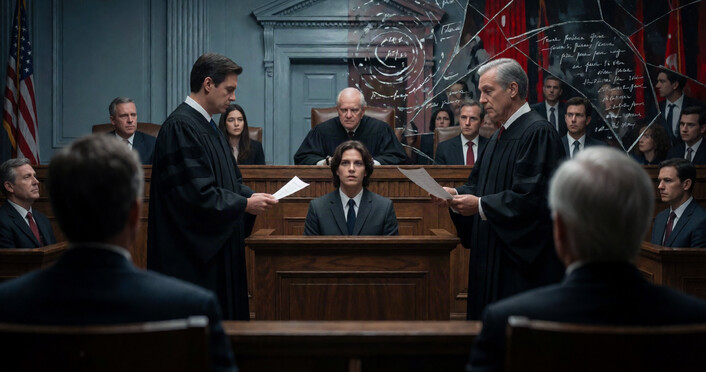
Use of Insanity Defense in Criminal Procedure
Insanity defense is additionally established as the defense based on mental disorder. Insanity defense is the defense in a criminal case by excuse, with the argument that the defendant is not fully responsible for what they are accused on doing based on persistent or an episodic psychiatric illness at the period when the crime was conducted (Ewing, 2008). Writers who offer constitutional law assignment help at Edudorm essay writing service notes that this implies that even after the verification that the defendant was involved in the commitment of crime, he is bound to avoid the criminal liability with the utilization of insanity defense. An insanity defense comprises of differences in all identified authorities. In some systems it is not the obligation of the defendant to be sorry for the committed crime so that freedom can be obtained from the liability (Ewing, 2008). However, almost all the systems necessitate the defendant to have suffered from mental disorder at the period when the criminal act occurred as opposed to their period of testing.
Insanity defense is most likely the most controversial strategies involved in criminal defense and in addition it is among the least utilized. In most instances, the utilization of this defense strategy results in public debates (Halevi, (2015). The insanity defense strategy makes the confirmation that the accused and guilty criminal defendant cannot be classified as guilty based on their insanity. The defense theory utilized in this strategy states that individuals who are not sane cannot hold the necessary intent in committing a criminal activity mainly since they do not hold the knowledge on whether the act is wrong or even, they may not be able to manage their conduct even after realizing that the act is immoral. The theory is one that is controversial because it is strange and complex in defining the insanity generally and the circumstances in which the insanity can be utilized in excusing criminal liability (Halevi, (2015).
Use of Insanity Defense in the United States
Insanity defense use is permitted in most states in the United States as well as other nations in the global surrounding. In America, some states such as Kansas, Idaho, Utah, and Montana do not approve the utilization of the defense strategy (Halevi, (2015). In other states the strategy of defense is permitted the proof standard is a necessity for the verification of insanity which differs based on the system used. Experts who offer law assignment help services at Edudorm indicates that the defendant is necessitated to prove their insanity in the American federal courts by the provision of convincing as well as well portrayed evidence. Similarly, in some of the state courts the insanity of the defendant should be proven by evidence pervasiveness while others necessitate the insanity of the defendant to be disapproved by the plaintiff beyond a state of reasonable doubt (Ewing, 2008).
The thought behind the utilization of insanity defense is fundamentally that an individual deserves to acquire a crime’s punishment committed given that they have adequate understanding of the difference amid wrong and correct (Halevi, (2015). In that the defense supposes that an individual that is characterized by mental illness is not capable of settling for the correct decisions and most individuals accept that mentally unstable defendants should not therefore be legally liable for the crimes. It is usual that an individual who is announced not to be guilty based on their insanity is required to undertake psychiatric assessments and treatments. In the instances of seasonal insanity, the assessment may not be a necessity (Bevans, 2014).
In most cases insanity defense approach lacks consistency from a single defendant to another based on the lack of standards of proves that is necessary in proving insanity. The evaluations are mainly grounded on the defendant’s impression on jury and the professional testimony that is provided (Bevans, 2014). Tutors who offer law essay help at Edudorm essay writing service acknowledges that there lacks an effective way of demonstrating sanity and the decisions of the cases is based on unreliable psychiatric results and the presentation of arguments. The major debate issue has been on the investigation of the legal description of insanity rather than the reliant on the medical one. The description has evolved in the recent years with the provision of distinct standards (Bevans, 2014). It is widely approved that the civil society should not certainly subject punishment on individuals with no mental stability based on the lack of behavioral control (Ewing, 2008). This belief justifies and fuels the maintenance of insanity defense approach in most states and particularly in America.
Conclusion
Insanity defense is a strategy that protects the rights of the minority group that is characterized by mental illness and despite its controversy it is useful in offering protection. However, to most individual the defense strategy permits most individuals involved in crimes to be free of their liability thus creating unfairness since the plaintiffs’ rights are in most cases ignored. This generates an unfair legal system of justice. It is very difficult to define and gauge sanity in most cases which may result in inaccuracy and the lack of justice transparency. It is true that all individuals are expected to be held accountable for all their actions but the uniqueness of the defense approach is one that can never be settled or discouraged based on its responsibility. The approach is one that is utilized rarely and therefore its maintenance is one that sustainable despite the controversy.
References
Ewing, C. P. (2008). Insanity: Murder, madness, and the law. New York: Oxford University Press.
Halevi, G. (2015). The matrix of insanity in modern criminal law. Cham: Springer.
Neal R. Bevans. (2014). Criminal Law and Procedure for the Paralegal. Cengage Learning. Print.