
Marbury vs Madison 1803 Case
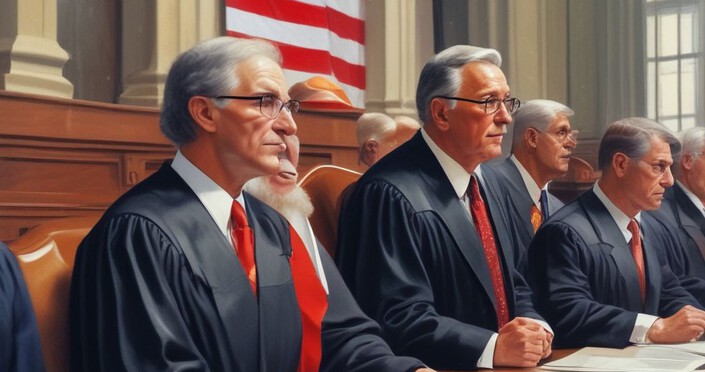
Facts on Marbury vs Madison 1803 Case
In Marbury vs Madison 1803 case, Marbury being the plaintiff in this case where he accuses Madison of not providing the required documents to him after being appointed the justice of the peace in Columbian district by the president. Writers who offer legal case study help at Edudorm essay writing service notes that the United States Supreme court of the landmark has to act according to the plaintiff’s wish since he had the mandate to represent the country in Columbia but the act was hindered by the decision by Madison to not release the document.
Issue on Marbury vs Madison 1803 Case
Marbury filed a case against Madison directly to the Supreme Court without having it being reviewed by a lower federal court. According to the law, a case is heard in the Supreme Court through three different ways (Mountjoy, 2009). These three ways are by direct means to the Supreme Court, through a lower federal court to the Supreme Court, and finally through the state court to the Supreme Court. Appellate jurisdiction is exercised he in the last two options while the original jurisdiction is exercised in the first option as used by Marbury in his petition. In his defense in Marbury vs Madison 1803 case, Marbury stated that the rule of law in 1789 gave permission to congress to enhance Supreme Court with original jurisdiction to cases that are ordered by the Supreme Court. This order led to issues that hindered decision making over the petition by Marbury (Mountjoy, 2009). Experts who offer civil law case study help at Edudorm essay writing service indicates that such issues are if the constitution’s article III allows for original jurisdiction, can the congress alter it or is the list exhaustive that the congress cannot alter? If the list is exhaustive and the Congress modifies it anyway, is it the congress or the constitution that wins the conflict? Lastly, who decides which party wins the conflict? To address the last question, the theory of judicial review is applied.
Rule on Marbury vs Madison 1803 Case
The court ruled in Marbury vs Madison 1803 case, that Marbury had reserved to be allowed to use the commission whereas the court had little or no power to compel Madison is providing the documents as requested by the commission. The Chief Justice by the name of Marshall ruled the decision in accordance with the constitution of law where in the case of vested legal right there has to be a remedy to right that compels court actions.
Application on Marbury vs Madison 1803 Case
Any federal court has the special obligation of ensuring the lower courts and itself is satisfied by the decision it makes and therefore its own jurisdiction. The case on the floor of the court is jurisdictional and therefore the constitution has to be applied in every sense (Mountjoy, 2009). However, in Marbury vs Madison 1803 case, this only applies in case an interpretation to the case is required where a constitutional issue arises. Authors who offer law essay help at Edudorm essay writing service points that Marshall determined that Supreme Court would rule considering the original jurisdiction as presented by the commission. Altering the original jurisdiction was unconstitutional and was against it in determining whether the case was a success for him.
Conclusion
In Marbury vs Madison 1803 case, Marbury had the right to win the case but the judiciary act section 13 prevented him from being granted the win since the act conflicts with Article III of the United States Constitution. The constitution gives the president the right to appoint any individual without any doubt of which Madison fails to agree on.
References
Mountjoy, S. (2009). Marbury v. Madison: Establishing supreme court power. New York: Chelsea House.