Communicable Diseases
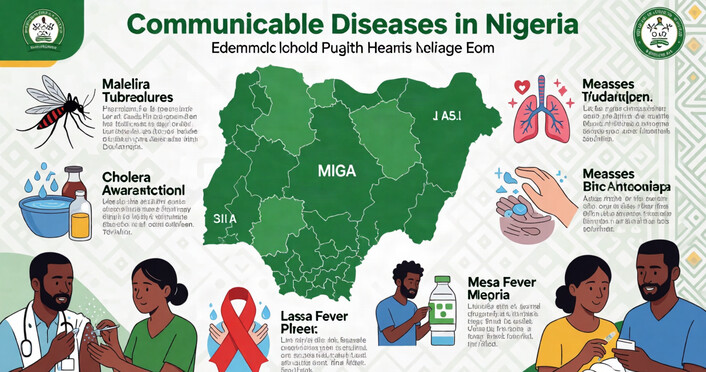
Communicable Diseases in Nigeria
Nigeria is facing challenges from communicable diseases such as HIV/AIDs, malaria, TB among other disease. Nigeria is ranked as the fourth country with the highest number of TB and it ranked as second country with highest HIV infection out of the countries with similar estimated incidents (Oladele et al, 2017). Writers who offer nursing assignment help at Edudorm essay writing service notes that TB infection is high due to nosocomial transmission. The country is not developing in terms of health system and as a result poverty and diseases are creating ill health reproductive. Poor developmental indicators are brought by socio-economic growth which is then affecting the health of people and reducing the life expectancy to 40years compared with other counties like Japan which has a life expectancy of 82years (Oladele et al, 2017). Since there is a poor socio-economic status, people in Nigeria have less access to water and only 45% can aces water sources. The vulnerable population is women and their reproductive health is at risk. There is a high maternal mortality from pregnancy risk.
There are many challenges in Nigeria which are hindering effective intervention to the communicable diseases. First, there are inadequate programs to address the health problems. According to WHOM statistics which were released in 2011, per 1000 live birth, the rate of infant mortality is 86. Per 100,000 live births, maternal mortality rate is 840 (Oladele et al, 2017). The rates are raising due to poor response toward the health issues. Other point is that the country lacks an evidence-informed policy which acts as a tool in controlling infectious disease. There is also a high rate of HIV transmission from mother-to-child and the cause is due to poor PMTCT services. The country face challenges in planning and implementation in that there is a heavy burden of communicable diseases which makes 90% but the annual budget which is allocated in addressing the health issue is 10% (Oladele et al, 2017). The health system remains behind due to poor response on the root causes of communicable diseases such as inadequate disposal, alcoholism and more. However, the country is on track with Millennium Developmental Goals with a target of reducing the higher rates of mortality by 275 per 100,000 live births and increase measles immunization (Oladele et al, 2017).
Recommendation on How to Handle Communicable Diseases in Nigeria
First, the health system should be restructured and ensure the availability of human and material resources. In order to achieve the MDGs, there should be skilled health providers who will provide high-quality care (Uneke et al, 2015). Experts who offer nursing writing help at Edudorm essay writing service indicates that communities who live in rural and urban areas should access affordable care. Referral system should develop so that patients can receive effective and efficient care. Given that the root cause of communicable diseases is poor socio-economic status, there should be provision of safe water and sanitation and good infrastructure (Uneke et al, 2015). The health system should also develop an Informed Policy-Making where health care providers will gain interdisciplinary skills and create initiatives for strategic benefits. Health workers will practice new skills and gain insight as well as experiences and as a result create encouraging team (Uneke et al, 2015).
Conclusion
Brazil, Asia and Nigeria are countries with poor health system. The health issues are brought by various factors and there is an urgent need to address these health issues. Government, healthcare providers and communities should be in the frontline to create a workable structure with adequate and available health care in order to alleviate the adverse health issues. In the long term, government and community should ensure quality socioeconomic status, education and reproductive health in order to achieve the set goals of health. Tutors who offer Medicare assignment help at Edudorm essay writing service acknowledges that in addressing the health issues affecting Brazil, Syria and Nigeria, the government should join hand with health care providers and respond early to the emerging threats. They should adopt new approaches for the management as well as prevention of communicable diseases, non- communicable diseases and humanitarian issues. Health care provides should have a comprehensive understanding of causes of disease so that they can create future directions in protecting the population.
References
Oladele, E. A., Khamofu, H., Asala, S., Saleh, M., Ralph-Opara, U., Nwosisi, C., & … Torpey, K. (2017). Playing the Catch-Up Game: Accelerating the Scale-Up of Prevention of Mother-To-Child Transmission of HIV (PMTCT) Services to Eliminate New Pediatric HIV Infection in Nigeria. Plus ONE, 12(1), 1-18. doi: 10.1371/journal.pone.0169342
Uneke, C. J., Ezeoha, A. E., Uro-Chukwu, H., Ezeonu, C. T., Ogbu, O., Onwe, F., & Edoga, C. (2015). Enhancing the Capacity of Policy-Makers to Develop Evidence-Informed Policy Brief on Infectious Diseases of Poverty in Nigeria. International Journal of Health Policy & Management, 4(9), 599-610. doi:10.15171/ijhpm.2015.100