Non-Communicable Diseases
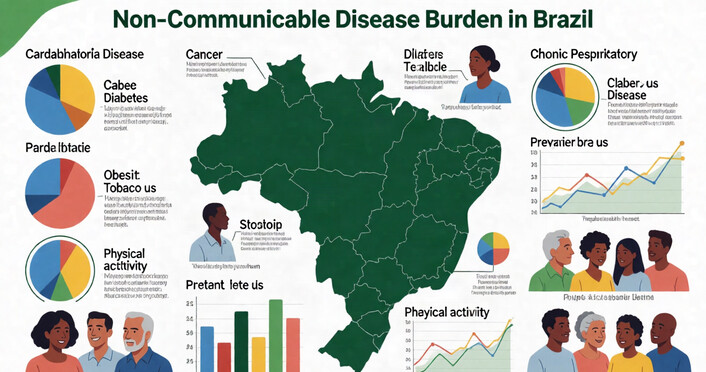
Non-Communicable Disease Burden in Brazil
Non-communicable diseases (NCDs) in Brazil have become a health problem. The vulnerable population is the poorest people who receive low and middle-income (Nunes et al, 2016). A systematic search in Brazil show that in 2007, 72% of deaths were caused by NCDs. Writers who offer nursing assignment help at Edudorm essay writing service notes that compared with communicable diseases which make 24%, NCDs are contributed by 66% disease burden. The largest contributor of non-communicable diseases is neuropsychiatric disorder. Smoking is also a major contributor of cardiovascular and chronic respiratory diseases. Diabetes and hypertension are higher due to lack of physical activity and poor diet (Nunes et al, 2016). There are unfavorable trends which are increasing the NCDs and so actions and policies are needed to address the challenges.
Brazil is on track with Millennium Development Goals and it assigned the document in 2003. The purpose of the indicator was to evaluate the economic indicators in order to provide quality of life and improve health conditions. The indicator has provided equitable health systems through restructuring the health system and implementing health system strategies (Nunes et al, 2016). However, the country is unable to address these challenges since there is lack of high-quality practice guidelines (CPGs). The health care system in Brazil lacks better management due to the failure of using CPGs as a special tool for decision making, drug utilization and NCD control (Nunes et al, 2016). Systematic research in Brazil concluded that the high level of non-communicable diseases is due to lack of multidisciplinary team, lack of concern on patients’ preferences and lack of formulation of recommendations.
Recommendation on How to Tackle Non-Communicable Disease Burden in Brazil
First, healthcare providers for non-communicable diseases should be provided with tools for evaluating high-quality clinical practice guidelines. For example, (AGREE II) tool is effective in CPGs evaluation. Experts who offer nursing writing help at Edudorm essay writing service indicates that other tools such as flowcharts and implementation instructions would work best in promoting adherence. The point is that healthcare provider should use high-quality clinical practice guidelines and this will be achieved through creating a multidisciplinary group, consider patients’ preferences and use selection criteria (Molino et al, 2016). Even though the country has developed health care system through Millennium Development Goals, the government should improve management and coordination of care through quality spending of public health resources (Molino et al, 2016). There are challenges and obstacles in access to health care services and so the government should use the right direction and expand the primary care coverage in order to eliminate the burden of diseases.
References
Nunes, H. G., Gonçalves, E. A., Vieira, J. J., & Silva, D. S. (2016). Clustering of Risk Factors for Non-Communicable Diseases among Adolescents from Southern Brazil. Plos ONE, 11(7), 1-13. doi: 10.1371/journal.pone.0159037
Molino, C. C., Romano-Lieber, N. S., Ribeiro, E., & de Melo, D. O. (2016). Non-Communicable Disease Clinical Practice Guidelines in Brazil: A Systematic Assessment of Methodological Quality and Transparency. Plos ONE, 11(11), 1-15. doi: 10.1371/journal.pone.0166367