Workplace Diversity Programs
Importance of workplace diversity programs
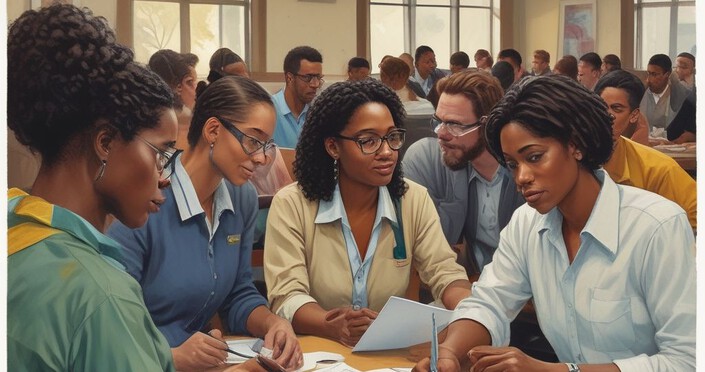
Workplace diversity programs are important as it indicates that there are different people with different attitudes within the organization. First, it is important to understand what diversity is in order to see whether diversity programs in workplace are effective. Diversity entails the difference in race, age, gender, education and more. Diversity programs play a significant role in organization in that through setting programs; organization leaders are able to understand all members and their differences. On the same note, workplace diversity programs reinforce members’ interaction through sharing different viewpoints, organization gains higher productivity through effective execution. Writers who offer college paper writing help at Edudorm essay writing service notes that diversity is valued in most organizations as different employees have group-identity differences which help organization in achieving its goals, improving productivity and maintaining global competition. In order to ensure that diversity is effectively incorporated in the workplace, there must be diversity programs for the purpose of providing workers with training and education, performance appraisal, career guidance and organizational policies. Thus, diversity programs in workplace are effective since their provide employees and other organizational members with skills for understanding the multicultural environment.
Workplace Diversity Programs Help in Training and Promotion Across the Globe
According to Peretz, Levi and Fried (2015) workplace diversity entails the background characteristics of different people and workplace diversity programs are implemented with the organization to maintain the diversity. Diversity across the globe has increased and organization has increased the efforts in training and promotion across the globe. In organization, members share the national cultural values and as a result gain a new perspective of the world. At this point, the authors argue that national cultural values are incorporated in the organizational diversity practices and thus diversity programs based on global leadership and the effectiveness of the behaviors are required. In national level, diversity contributes to inspirational values which in turn impact the leadership behaviors (Peretz, Levi & Fried, 2015). Thus, organization implements diversity programs for the purpose of helping the organization to adapt to the new national environment in order to stay competitive. In other words, the authors tend to show that in national cultural values, workplace diversity programs are effective in adopting the changing demographics. Other important point is that in global level, inspirational values create individualism and collectivism Both dimensions have distinctions in that the formers concentrates on personal needs, rights and social behaviors (Peretz, Levi & Fried, 2015). The latter focuses on collective action and shows pride and loyalty in the organization. Thus, the interrelated dimensions presented in different societies indicate that one society or organization with individualism will implement workplace diversity programs hence reinforce equal opportunity particularly to minorities.
Workplace Diversity Programs Are Effective in Power Distance
In organization, workplace diversity programs are effective in power distance. This means that members in societies with high power distance focuses on equal distribution of power and members are expected to have strong relationship and diverse members are not included. This results to adverse effect in the organization since members from societies with low power distances are excluded hence creating social mobility (GOODMAN, 2016). Power distance in both societies differs and at this point, diversity programs will be effective in creating unity between high and low power distance societies. Workplace diversity programs also play role in uncertainty avoidance. In this case, organizational members tend to show different social norms and diverse process which can be used to reach the future. It is important to note that members from societies with high-uncertainty avoidance do not accept change and they find it hard to change the status quo (GOODMAN, 2016). Thus, workplace diversity programs will be effective in creating common goals between the two different societies. Other point is that different in workplace diversity occur in issues based on future orientation. Experts who do my research paper at Edudorm essay writing service indicates that members with high future orientation focus on organizational development and believe that development can be achieved through investment. On the other hand, members with low future orientation do not hold long-term prospects and so they focus on spending rather than future development. The different perception on future orientation will be solved through workplace diversity programs which will provide them with skills needed for future growth (GOODMAN, 2016). Other important point to look at in evaluating the effectiveness of diverse program is gender egalitarianism. Members in organization hold different views based on gender roles. For example, members whose views are on low gender egalitarianism believe in women exclusion and gender roles. In this case, workplace diversity programs will be effective in teaching the diverse members the importance of workplace diversity and how different perspectives and gender roles with contribute to positive organization outcomes (GOODMAN, 2016).
Workplace Diversity Programs Promotes Gender Equality
Ali, Mrtz and Kulik (2014) bring important information based on the effectiveness of workplace diversity programs on gender diversity. The authors introduce the work-family programs and how they play a great role in eliminating the conflict between male and women particularly in family matters. First, it is important to note that women’s participation in other organization has dramatically increased and this has brought a high level of gender diversity. For example, the Australian Bureau of Statistics shows that in 1986, women in workplace were 41.4% and in 2010, the number increased to 47.1% at nonmanagement levels (Ali, Metz, & Kulik, 2015). On the same note, in management levels, the number increased from 22.5% to 34% in the same years. In U.S, Bureau of Labor Statistics show that in management level, women in workplace in year 1983 was 48% and the number increased up to 42.6% in 2010. This clear indicates that there is a change in gender role between men and women as both have the responsibility to work in organization as well as in their families. At this point, the authors assert that workplace diversity programs and in this case the work-family (WF) program will be effective in supporting the gender diversity (Ali, Metz, & Kulik, 2015). Through education, advice and skills of managing family-organization work, the programs will create family-friendly organization and both men and women with feel that their organization is supportive and as a result of working in a supportive environment, they will increase work productivity and productivity. Other important point to note in WF programs is that it offers flexible work planning and workers are motivated to work for completion but not for physical presence (Ali, Metz, & Kulik, 2015). Other key point is that the organization with many WF eliminates the family conflict brought by gender diversity and women are able to balance their work hence create work-family facilitation.
Cultural Competency
O’Neill (2016) asserts that organizations must implement strategies for competent workforce in order to maintain the competitive edge in the global market. Cultural competency indicates that leaders should have the appropriate knowledge and skills in order to understand the diverse backgrounds of each employee. Organizations which lack cultural competency cause discrimination to minority. For example, a business many deny a pregnant woman the opportunity to work, unknowingly that the employee has the knowledge, skills as well as talents required in that particular kind of a job (O’Neill, 2016). Generally, the author asserts that in a diverse organization, members come across unconscious bias since employees’ views the world differently and the diverse perspectives can affect the HR process. In order to prevent the unconscious bias, the author asserts that it is important to take proactive approach through creating workplace diversity programs (O’Neill, 2016). Tutors who offer essay writing help at Edudorm essay writing service acknowledges that at this point, the programs will be effective in that managers and leaders will understand the employees’ cultural skills and talents and remove the impediments which may affect them through creating a cross-cultural communication. Through training and active participation, diverse workers will share ideas, learn and value the culture of others (O’Neill, 2016).
Provide Mutual Learning and Shared Understanding
According to Clutterbuck (2012), in workplace diversity, diversity mentoring programs are effective in providing mutual learning and shared understanding hence creating organizational change. Note that mentoring program mainly focuses on personal change and diverse employees understand the importance of diversity and how it can bring a significant social change in their lives.Through mentoring, managers are able to evaluate talents and personal potentials hence creating an environment for equal opportunities (Clutterbuck, Kochan, & Poulsen, 2012). The effectiveness of workplace diverse programs and in this case the mentoring program is seen through three levels. First, mentees become self-motivated and becomes connected with the external world. Second, mentors understand the differing background and this helps them to remove the barriers which hinder advancements. Third, diversity mentoring in general brings a positive impact to the entire organization as both employees and employers’ values diversity and organization is able to appreciate more diverse workforce hence improve productivity (Clutterbuck, Kochan, & Poulsen, 2012). Through mentoring, the disadvantaged groups create strong relationship with other parties and as a result, all employees or mentors will interact with mentees and engage in rapport-building. Other important is point is that mentoring programs helps employees in creating self-confidence, trust; authenticity and he or she values other cultures (Clutterbuck, Kochan, & Poulsen, 2012). Mentees get an opportunity in creating career development personal development and ambitious goals.
Many American companies have created suitable working environment and developed workplace diversity programs in order to deal with the problems of inequities which minorities face. Minorities experience discomfort, exclusion, discrimination and frustration and as a result they cause higher turnover rates hence low productivity in the organization (Muir, 1996). The author asserts that in order to eliminate the diversity conflict and allow the minorities to be satisfied with corporate life, organization should implement the readiness model and integrate the social and interpersonal relationship program or in other words the readiness program. The programs are not designed for employees but rather they are used by the organization for the purpose of evaluate and examining the macroenvironmental situations (Muir, 1996). Through the program, the organization will open the path of creating training, organizational policies, mentoring, career guidance and outreach programs. It will be possible to open the named programs because through evaluating the social dynamics, the organization will be evaluating the organization members affiliation, examine the social networks, formal procedures and interview individuals on how their view diversify (Muir, 1996). The importance of employing the social dynamic programs before planning other programs is that it will bring change agents. This means that through examining the employees’ background and views on diversity, the organization will select people who will act as change agents with respect to their effective communication with other organization members (Muir, 1996). The selected people will play a great role in creating other workplace diversity programs, disseminating information and providing guidelines. Other important point is that the readiness program will allow the organization to create strategies which will be used in delivering the diversity message in other programs.
In economic profession, racial and ethnic minority are underrepresented. For example, there were 500 doctorate degrees and only 42 African Americans and Latinos and 157 women were awarded. There is a gender gap in the economics profession and the authors assert that the gender gap and diversity is brought by supply-side factors and demand-side factors (Bayer & Rouse, 2016). The former indicates that minority groups are underrepresented in terms of math’s aptitude. Economists regress the administrative data and definitive a conclusion is excluded. Authors who write my essay assignment at Edudorm essay writing service points that on demand-side factors, there is an explicit discriminatory behavior and implicit bias where economists cause disparities such as taste-based discrimination in social stereotypes (Bayer & Rouse, 2016). Generally, this is an issue of concern in discussing the diversity issues in organization. It is also found that while making economic decision, economists hold different views in that a high number of decision makers’ particular men agree that there should be no equality in labor market opportunities. In a dressing the diversity issues in economy, the authors show the effective of workplace diversity programs by asserting that pipeline programs play a significant role in engaging member in field of study and gains skills based on health professions (Bayer & Rouse, 2016). In addition, mentoring programs are effective for female economists in that in the field of study, senior mentor provides them with teachings and balancing work skills.
Conclusion
Due to the dramatic growth of global markets, work diversity is a business necessity. Organizations are valuing the diversity since it acts as an organization benefit through the accumulation of diverse ideas from both internal and external environment. Organization is global connected and so they are using the diverse ideas in global markets so that they can bring innovation, solve problems, create community loyalty, gain global understanding and improve productivity. However, diversity cannot be beneficial to the business if there are no workplace diversity programs. The programs play a significant role of offering training and education and organization policy. Through programs, emplioyees understands each other, gains mutual respect and more important understands the multicultural environment.
References
O’Neill, R. (2016). The Importance of a Diverse and Culturally Competent Workforce.
Busidate, 24(3), 9-13.
Clutterbuck, D., Kochan, F., & Poulsen, K. M. (2012). Developing Successful Diversity Mentoring
Programmes: An International Casebook. Maidenhead, England: McGraw-Hill Education.
Muir, C. (1996). Workplace Readiness for Communicating Diversity. Journal Of Business Communication,
33(4), 475-484.
Ali, M., Metz, I., & Kulik, C. T. (2015). The Impact of Work-Family Programs on the Relationship between
Gender Diversity and Performance. Human Resource Management, 54(4), 553-576.
doi:10.1002/hrm.21631
Peretz, H., Levi, A., & Fried, Y. (2015). Organizational diversity programs across cultures: effects on
absenteeism, turnover, performance and innovation. International Journal of Human Resource
Management, 26(6), 875-903. doi:10.1080/09585192.2014.991344
Bayer, A., & Rouse, C. E. (2016). Diversity in the Economics Profession: A New Attack on an Old
Problem†. Journal Of Economic Perspectives, 30(4), 221-242. doi:10.1257/jep.30.4.221
GOODMAN, N. (2016). Diversity Is Reality; Inclusion Is a Choice. Training, 53(5), 56-57.