Chinese Shamanism Society
Understanding Chinese Shamanism
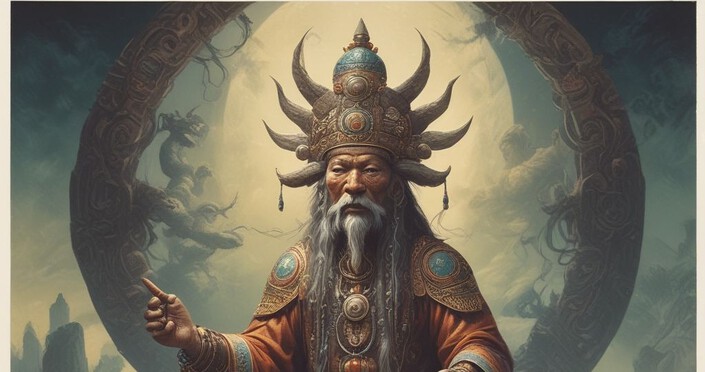
Chinese Shamanism became popular in ancient China through the development of Taoism in Han dynasty-which was the Chinese philosophy of religion. In ancient China, many years ago, Chinese did not have their national or religious identity. In 20th century, Chiou dynasty developed shamans who conducted certain functions. Their major tasks were inviting the spirit and providing them with permanent places where they could dwell. Shamans also played the role of interpreting dreams as a way of revealing the message which the spirit had for the realm. Shamans were also creating the healing ceremonies where they could remove out the malevolent spirits and restore the life. However, the history of Chou dynasty period concluded that shamans failed to fulfill their roles since they did have the sacred powers of Yu. Given that shamans in Chou dynasty was declined, shamanism religion activities were practiced by Ch’u, Wu and Yueh. In Chinese shamanism, shamans were referred to as Wu- which means a male mediator during Shang dynasty and later a female shaman was introduced in Zhou dynasty. The religions from the two dynasties (Shang and Zhou) performed different religious activities in that Shang believed in ancestors, Wu practices and oracle bones while Zhou opposed the ancestors. Writers who offer history research paper help at Edudorm essay writing service notes that Chinese religion was developed from Shang and Zhou period and shamans in the two periods had different religious beliefs. In Chinese shamanism society, Wu were used as the spirit mediums in shamanism activities where Shang kings and Wang were Wu-shamans though their religious practices differed and their difference practice marked the history of shamanism in modern world.
History of Chinese Shamanism
Taoist magicians’ practices were based on removing out malevolent spirits and destructive forces. A thousand years after the development of Taoist, Chinese tribes achieved the national identity and families were given lands (Wong, 2011). During this period, Yu the Great and other kings were participating in spring and autumn ceremonies while Chinese Shamanism was practiced by professionals. There was effectiveness in the feudal kingdoms and the emperor was strong. In 770 BCE, there was sociopolitical turmoil in Chou Empire as a result of powerful feudal kingdoms of Chou (Wong, 2011). The classical period occurred during the spring and autumn period when the feudal states were more powerful and created the Five Warlords of this period. The feudal lords expanded the territories and used their military strength in building other powerful states. The classical period was developed during the Tao-te ching. At this period, Tao-te ching taught that all things in the universal derive its power from Tao. Note that the Tao teachings differ with shaman’s animistic views as Tao beliefs on benevolent power (Wong, 2011).
After the warring period, Taoism developed an organized religion during the golden age and sacred ceremonies were initiated. Ch’in dynasty eliminated the mercenary statesmen and political adverse and this led to unification in China. The Han emperors created a centralized government to prevent mercenary statesmen in advising feudal lords (Wong, 2011). Han dynasties created a social class and trained political advisers in art of healing and divination. The social class-fang-shih- played different roles based on healing and divination and others were trained on longevity and immortality. Taoism was also transformed into an organized religion in order to create the hierarchy of spirits as well as the honoring practices. The transformation of philosophy to an organized religion led to the Mystical Taoism in (300-600 CE (Wong, 2011). Mystical Taoism developed the beliefs that the cosmic powers live in human body. The mystical had both mysticism and shamanism concepts were rooted from Chin dynasty. Experts who offer history assignment help at Edudorm essay writing service indicates that the Shang-ch’ing Taoism (Mystical) taught that the internal universe which is the human body is guarded by spirits and deities and the two lives in the body. Thus, the guardians should be maintained so that they can sustain life. In addition, the teachings of Mystical Taoism taught that the external universe is the celestial bodies and the starts, sun and moon strengths the immortal fetus as well as the body guardians (Wong, 2011).
In Chinese shamanism society, Wu was the shaman but the term was defined differently. First, Wu character was found on scapula bone in 1500 BC. Other argues that Wu character was found in Eastern Zhou period (Gilles, 2002). In Chinese history, Wu is defined as male and female from Shang and Zhou periods. The traditional culture of Chinese was created from divination which is found in form of Scapulimancy. The culture used oracle bones for divination which was developed during the Shang period. Bones of sacrificed animals were used in divination as it was believed that the animal spirit interacted with other spirits. During Neolithic period, Chinese worshiped the Ancestors as they believed that the ancestors’ spirit dominated life (Gilles, 2002). They assert that the art of Wu developed the Shang religion and through the Oracle bone, Wu designed an image of a person who performed ritual activities. Dancing and divination from Wu arts represented the Chinese Shamanism practices. The practices between Shang King and Zhou differed in that Shang king followed the Wu’s religious practices in performing the duties (Lindgren, 2010). In addition, Shang king demonstrated his political power in religious activities. He worshiped Di, royal ancestors and other deities. It is important to note in Shang religion; shamans were not artists but they acted as artist in performing religious function such as divination. They acted as Wu and followed the Wushu arts and in Shang divination, Wu art played a significant role in healing and making rain (Gilles, 2002).
The Zhou dynasty rejected the Shang religion and believed on ancestors and nature deities. Zhou religion believed in Tian whom they referred to as the impersonal deity. In other words, Tian acted as the ancestral spirit and in Zhou practices, Chinese Shamanism practices declined and female shamans was less usual (Lindgren, 2010). Unlike in Shang religion where Wu was seen as an art and religion followed the art in practicing, Zhou viewed Wu as a person who came from untamed nature and was involved in unfortunate events. Wu was connected with impurity and had the malevolent power in conducting religious activities. In comparing the religious acts between Wu (shaman as artist) and Zhou (artist as a shaman), the former during the Zhou period was not recognized and it was believed that the female shaman did not reach the spirit through religious acts (Lindgren, 2010). Authors who offer history essay help at Edudorm essay writing service points that Chinese believed that animal were to be involved in shamanistic rituals and secular duties increased during this period. In ancient China, humans and spirits existed but they could not come into contact. Wu and Xi were single-minded and they could understand the spirit. Zhu acted as invocators as they could find the spirit during the ceremonies, understand the principle of ancestors, enforce respect and control trust (Lindgren, 2010). This shows that Wu and Zhou had different roles as one could understand the upper world and the other could understand the lower world.
Evolution of Chinese Shamanism
From traditional to modern times, divination has been viewed as an important feature. Scapulimancy and oracle bones were used and the phenomena are still applied in North America and the central parts of Asia (Lindgren, 2010). During the Shang period, the art of divination and writing were developed and it is believed that bones of sacred animals were used in the divination ceremony. In comparing Shang and Zhou dynasty, there is difference in their religious activities following that during Shang dynasty, Shang king valued the divination and the act marked the Chinese shamanist history (Lindgren, 2010). In the divination ceremony, shaman played the role of presenting bones which was used for writing the questions which Shang king could ask. In Zhou and Shang period, religion was quite different following that Shang believed in spirits, good and evil while Zhou was more transcendental. Shang religion concentrated on ancestral rituals but Zhou concentrated on poetry and writing. The difference changed the people’s mind and religion was centered on both nature and humanism. Mankind, ancestors and heave as well as determined the way of life (Lindgren, 2010).
Relationship between Chinese Shamanism and Mesoamerican Art
Chinese Shamanism activities have played a great role in Mesoamerican Art given that in the past decade, Mesoamericanists have been using shamanism concepts in their artworks (Klein et al, 2002). Many scholars such as anthropologists, art historians and others have been using the social scientific literature in dealing with complex questions and issues related with religion and politics. Chinese Shamanism and art have brought an importance contribution in helping the Mesoamerican artworks focus on ‘the spiritual’. Since 1960s, during the methodological crisis, the pre-Columbian art was taught in Yale and Columbia University which concentrated on diffusionism (Klein et al, 2002). Tutors who offer history case study help at Edudorm essay writing service acknowledges that the latter played a big role in this period in focusing on ancient transpacific maritime, Asian and Latin America resemblance. Since 19th century, U.S anthropologists have used the diffusionism in understanding the evolution of human history. They have also used the shamanism activity in understanding ‘the spiritual’ which has contributed to the idea of ahistorical and apolitical. The Chinese Shamanism activities have shaped the humanistic anthropology and through studying art, many scholars have characterized the religion as ideation (Klein et al, 2002).
Shamanism in Modern Western World
Anthropology and religious scholars have relied in Chinese Shamanism concept since 1970s. Shamanism in modern western has created a complex adversarial connection between traditional and modernity. In 20th century, shamanism concepts were re-evaluated and America introduced new data in explain shamanism but a patent truth has remained to be derived from Siberia (Hutton, 2007). Russian and other western nations have presented the shamanic practices in modern ages. In 16th and 17th century, Russians colonized Siberia and since this period, Siberia religion was established in the Middle Ages and shamanism beliefs were practices in northern Scandinavia. In 20th century, historians started studying comparative religions of Siberian shamanism (Hutton, 2007). Modern scholars follow the shamanism practices and elements in European prehistory and South African artworks. Shamanism practices are found in Neolithic art and Siberians are practicing neoshamanism and are developing Neoshamanic movement.
The 19th century notions have shaped the modern shamanism activities and have contributed to an enchanting nature. In modern times, it is noticed that there is a division between the sacred and material world where the culture is newly ordered. Shamanism activities have created the ‘New Age religion’ and diachronic development which both has caused the neoshamanism (Stuckard, 2002). The important concept in western contemporary shamanism is nature. Modern western shamanism derived some important features of nature from 20th century and the concept of nature has shaped the western mysticism. The nature and art in Europe and North America are derived from 18th and 19th century philosophy. The old philosophy is explicit in modern times following authors are applying Schelling philosophy, esoteric traditions and others’ views them as romantic lineage in conducting shamanism activities (Stuckard, 2002). Mentors who offer history homework help at Edudorm essay writing service recognizes that in modernity, shamanisms activities are related with nature hence provide a great understanding of ecology and spiritual practices. Deep ecology has been used since 1972 to understand the ethics and politics and nature teleology in modern world. In shamanism practices, the deep ecology is used to understand the earth and the cosmos and provides metaphysical explanation of interpreting the reality. Thus, the 19th century though provides a philosophy of nature in creating western esotericism and ‘New Age Science’ (Stuckard, 2002).
Religions and philosophies are using shamanism in understanding the eternal principle which connects humanity with nature. In modern times, people with religious believes are defining shamanism as a way of understanding one’s life, a way of improving inner powers, vitality as well as creativity (Meadows, 2004). It is used as an ancient wisdom which through following the shamanism activity, one can become connected with nature and gain harmony. Thu, Chinese Shamanism is used as a practical guide in connecting humanity with nature and helping people in fulfilling their spiritual needs. The western art in modern times is shaping the shamanism activities by connected shamanism spirit with humanity and allowing people to understand the physical body, the mind, the soul and the spirit (Meadows, 2004). In meeting personal fulfillment, people understand that all people are spirits and the spirit is made of body, mind and soul. The spirit here stands for the life and also it is the original being. The spirit has the freedom to share its life-energies with other beings and create mutual understanding, harmony and control own existence and identity. Chinese Shamanism spirit plays a great role in people’s life in teaching that people are wonderfully made and everyone has a purpose here on earth (Meadows, 2004).
Conclusion
Chinese Shamanism was a religious tradition which were practiced in China and mainly the activities were practiced by Neolithic and Hongshan culture. Chinese defined their shaman as Wu and different cultures could define Wu as a female and others as a male. Zhou and Shang dynasty defined Wu differently and their difference perceptions develop diverse Chinese Shamanism practices. Generally, Wu was powerful and played the role of connecting supernatural forces, healing, making rain, divination and other religious practices. Wu in Shang and Wu in Zhou practiced different practices where the former believed that Wu was a sacrifice, a spirit and a human being. The latter believed that Wu was not a spirit but she was a person from untamed nature. The Western Art has shaped the Chinese Shamanism activity as many scholars have applied shamanism activities in their artwork. Recent phenomena are used in Mesoamerican art in trying to understand the human history, religion and politics.
References
Wong, E. (2011). Taoism: An essential guide. Boston: Shambhala.
Lindgren A. Linda. (2010). Shamanism and Chinese Goddesses. ~Xi wangmu and Nugua~
Gilles Boileau (2002). Wu and Shaman
Klein F. Cecelia, Guzman Eulogio, Mandell C. Elisa & Mazzi-Stanfield Maya (2002). The Role of Shamanism in Mesoamerican Art. A Reassessment.
Hutton, R. (2007). Shamans: Siberian spirituality and the Western imagination. London: Hambledon Continuum.
Stuckard Von Kocku (2002). Reenchjanting Nature: Modern Western Shamanims and Nineteenth-Century Thought
Meadows, K., & Meadows, K. (2004). Shamanic spirit: A practical guide to personal fulfillment. Rochester, Vt: Bear & Co.